

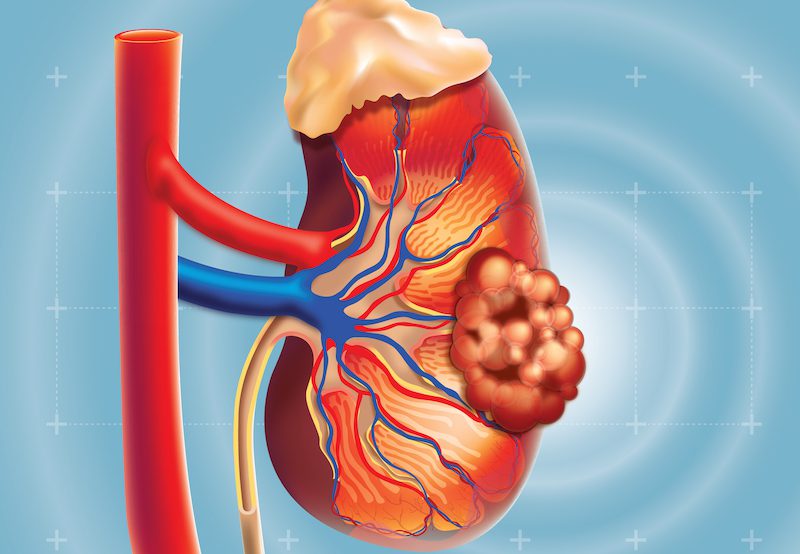
Kidney cancer occurs when abnormal cells grow uncontrollably within the kidney. The most common form is renal cell carcinoma (RCC), which accounts for over 90% of adult kidney cancers. Because early kidney cancers often cause no symptoms, timely evaluation of warning signs—and close monitoring for individuals with risk factors—is essential. Risk factors include smoking, high blood pressure, obesity, certain genetic conditions, and family history.
Common Types of Kidney Cancer
- Renal Cell Carcinoma (RCC): Originates in the lining of small tubes in the kidney; includes subtypes such as clear cell, papillary, and chromophobe
- Urothelial Carcinoma: Begins in the lining of the renal pelvis and behaves similarly to bladder cancer
- Wilms Tumor: A rare kidney cancer that primarily affects children
- Renal Sarcoma: An extremely rare type affecting the kidney’s connective tissues
Symptoms
Kidney cancer may be discovered incidentally during imaging for unrelated issues. When symptoms do appear, they may include:
- Blood in the urine (hematuria)
- Persistent flank or back pain
- A palpable mass or lump in the side or abdomen
Diagnosis
Evaluation often includes:
- Imaging Studies: CT scans, MRI, and ultrasound to locate and assess the tumor
- Urine and Blood Tests: To evaluate kidney function and detect cancer markers
- Biopsy: May be performed if diagnosis is unclear or to guide treatment decisions
Treatment Options
Treatment is tailored to tumor type, size, location, stage, and overall patient health. Options may include:
Surgery
- Partial Nephrectomy:
Removal of only the tumor while preserving the rest of the kidney; preferred for small or anatomically favorable tumors. - Radical Nephrectomy:
Removal of the entire kidney, sometimes with surrounding lymph nodes or adrenal gland. - Minimally Invasive Surgery (Robotic or Laparoscopic):
Offers reduced recovery time, less pain, and smaller incisions.
Ablative Therapies
- Cryoablation or Radiofrequency Ablation:
Effective for small tumors in select patients who are not ideal surgical candidates.
Systemic Therapies
- Targeted Therapy:
Medications that block specific pathways cancer cells use to grow. - Immunotherapy:
Boosts the body’s immune system to recognize and fight cancer cells; now a cornerstone of advanced kidney cancer care.
Active Surveillance
- Appropriate for small, slow-growing tumors in older patients or those with medical comorbidities.
Follow-Up and Monitoring
Ongoing surveillance is essential after treatment to monitor for recurrence or spread. Your urological surgeon will develop a personalized follow-up plan that may include periodic imaging, lab tests, and clinical evaluations. Early detection and expert management significantly improve long-term outcomes.