
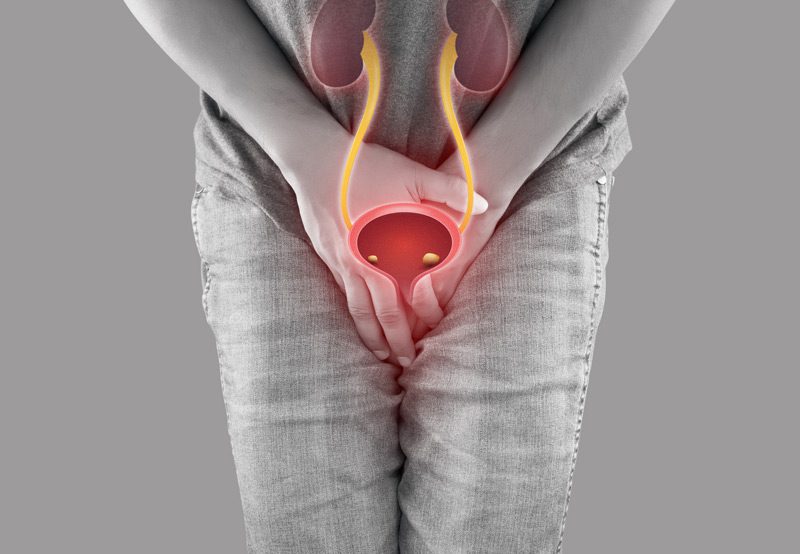
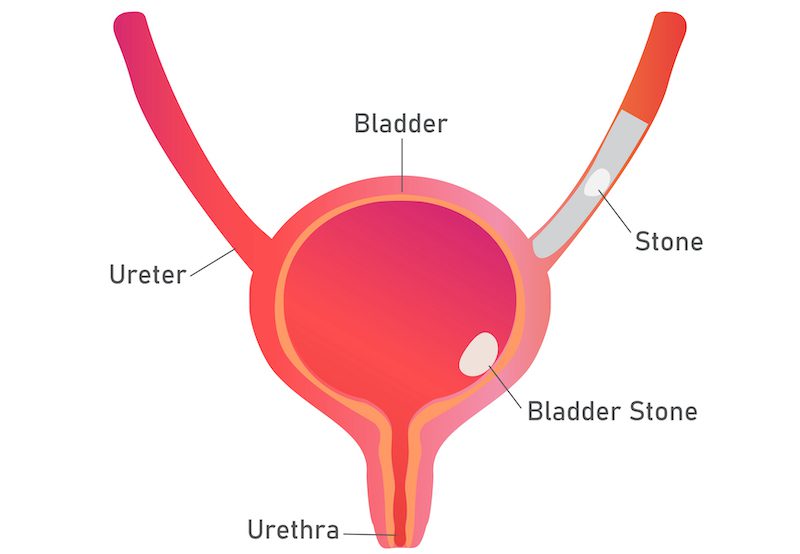
Bladder stones are hard mineral deposits that form when urine in the bladder becomes concentrated and minerals crystallize. They can range from tiny grains to large, obstructive stones. While very small stones may pass on their own, most bladder stones require surgical treatment, especially when they cause pain, infection, bleeding, or urinary blockage.
Causes of Bladder Stones
Bladder stones almost always occur when the bladder does not empty completely. Stagnant urine promotes crystal formation. Common causes include:
- Bladder outlet obstruction, most commonly from benign prostatic hyperplasia (BPH) or urethral strictures
- Neurogenic bladder, where nerve dysfunction affects bladder emptying
- Chronic urinary tract infections (UTIs)
- Foreign objects in the bladder, such as catheters or surgical mesh
- Kidney stones that travel down and remain in the bladder
Correcting the underlying cause is an important part of long-term prevention.
Symptoms of Bladder Stones
Some bladder stones cause no symptoms. When symptoms occur, they may include:
- Painful urination (dysuria)
- Frequent urination or interrupted stream
- Difficulty initiating urination
- Blood in the urine (hematuria)
- Lower abdominal, pelvic, or penile pain
Symptoms often worsen with movement or at the end of urination.
Diagnosis
Evaluation usually begins with a physical exam and medical history. Diagnostic tools may include:
- Urinalysis: To detect blood, infection, or crystals
- CT scan: To confirm size and location
- Cystoscopy: Direct visualization using a small camera inserted through the urethra
Treatment Options
Treatment depends on the size, number, and underlying cause of the bladder stones.
- Cystolitholapaxy: A thin scope is placed through the urethra to identify the stone. Laser or mechanical energy is used to break it into small fragments, which are then irrigated out. This is the standard approach for most stones.
- Open or Robotic Surgical Removal: Rarely, very large stones or stones associated with other complex conditions require an
Prevention
Preventing future bladder stones involves addressing the underlying cause:
- Managing urinary retention or BPH
- Treating infections promptly
- Staying well-hydrated
- Regular follow-up for those with chronic bladder dysfunction
Bladder stones are highly treatable, and most patients experience immediate improvement once stones are removed. Identifying and addressing the root cause is essential for preventing recurrence and maintaining long-term bladder health.